

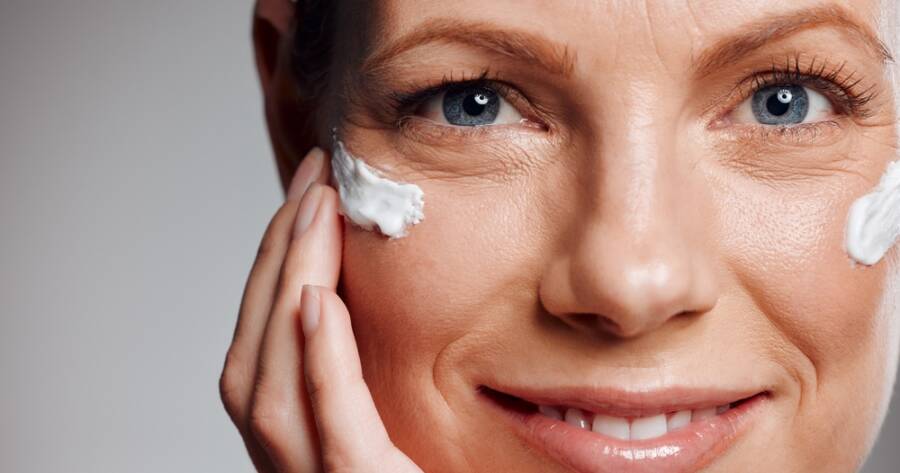
Choosing anti-aging products can feel confusing because the shelves are full of creams, serums, oils, masks, and treatments that all promise smoother, brighter skin. A better way to shop is to start with your skin type, your main concern, and the routine you can actually follow. The right products do not need to be the most expensive or the most complicated. They should protect your skin, support moisture, and fit your daily life.
Start With The Products That Matter Most
A good anti-aging routine should begin with daily sun protection and a dependable moisturizer, because these two products form the base of a practical plan. Sunscreen helps protect exposed skin from sun damage, and moisturizer can make fine lines look softer by helping the skin hold water. Before buying a long list of serums, start by choosing these basics well.
Look for a sunscreen that says broad spectrum, SPF 30 or higher, and water resistant on the label. Broad spectrum matters because it means the product helps protect against both UVA and UVB rays, while SPF mainly points to UVB protection. Water-resistant sunscreen is tested for either 40 or 80 minutes of protection during water exposure, so the label can help you pick a better option for sweat, swimming, or outdoor time.
Match Products To Your Skin Type
Dry skin usually needs a richer routine with a gentle cleanser, a cream or ointment-style moisturizer, and anti-aging products that do not make tightness or flaking worse. Creams and ointments tend to add more moisture than lotions, which can make them a better choice for people who often feel dry after washing. If your skin feels rough, itchy, or easily irritated, fragrance-free products are usually a safer place to start than scented formulas.
Oily or acne-prone skin may still need moisturizer, but the texture matters. A lightweight gel, lotion, or oil-free cream may feel better than a heavy product. Combination skin may need a split approach, such as a lighter moisturizer on the T-zone and a richer one on dry areas. Sensitive skin should keep the routine simple and add new products slowly, since irritation can make the skin look red, uneven, or more textured.
Choose Ingredients Based On One Main Goal
The best anti-aging product is not always the one with the longest ingredient list. It is usually the one that targets your main concern without causing problems. If fine lines and uneven texture are your top concerns, a retinol product may be worth considering. Retinol is a type of retinoid that is often used in over-the-counter products for uneven tone, pigmentation, and texture.
If your main issue is dryness, a strong moisturizer may do more for your skin’s appearance than a strong active treatment. Moisturizers can make the skin look smoother by temporarily plumping the surface, which can make lines look less visible. If dark spots, roughness, or deeper wrinkles are your main concern, over-the-counter products may help only so much, and a dermatologist can help you decide whether a prescription or office treatment makes more sense.
Build Around Your Morning Routine
Your morning routine should be simple enough to repeat every day. For many people, that means cleanser, moisturizer, sunscreen, and makeup if desired. The order matters because products work best when they are layered in a practical way: cleanse first, apply any treatment next, then use moisturizer and sunscreen before makeup.
If you are busy, choose products that remove steps instead of adding them. A moisturizer with sunscreen can work well for some mornings, as long as it gives enough protection and you apply enough of it. A tinted sunscreen can also help replace a separate complexion product. The goal is not to create a perfect shelf; it is to create a morning routine you will use before work, errands, school drop-off, or outdoor time.
Plan Your Night Routine Carefully
Night is often the best time for treatments that do not need to sit under sunscreen or makeup. This is when many people use retinol or other targeted products, but it is smart to start slowly. Retinoids can be a good option for mild fine lines, mild pigment changes, and mild texture concerns, but people with skin allergies or very dry skin may not be good candidates.
A simple night routine might include cleanser, treatment, and moisturizer. If your skin is sensitive, you may need to use a treatment only a few nights a week at first. You can also apply moisturizer before and after a treatment to reduce dryness. Do not add several anti-aging products at the same time, because using too many active products can irritate the skin and make signs of aging look more noticeable.
Shop By Budget Without Guessing On Price
A smart budget starts with categories, not brand names. Put most of your focus on sunscreen, moisturizer, and one targeted treatment. That keeps the routine easier to follow and helps avoid buying several products that do the same thing. It also makes it easier to notice whether one product is helping or causing irritation.
Avoid judging a product by luxury packaging alone. Instead, read the label and decide whether it fits your skin type, your main concern, and your routine. If a product claims to solve every sign of aging at once, be cautious. Creams, gels, and lotions cannot reduce every sign of aging, so it is better to choose one main concern and give the product time to work.
Test New Products Before Full Use
Testing a product first can save you from using it across your whole face and then dealing with irritation. A simple home test involves applying the product to a small area, such as a quarter-sized patch on the inside of the arm, once or twice daily for 7 to 10 days. If the area stays clear, the product is less likely to cause a problem when used more broadly.
This step is especially useful for sensitive skin, eczema-prone skin, rosacea-prone skin, or anyone who has reacted badly to skincare in the past. It is also useful when trying retinol, exfoliating acids, fragrance, botanical blends, or new sunscreen filters. A patch test cannot promise that your face will never react, but it is a simple way to lower the chance of a bigger setback.
FAQ
Can I use anti-aging products if I am in my 20s or 30s?
Yes, but the routine does not need to be aggressive. Sunscreen, moisturizer, and gentle cleansing can build a strong base before deeper lines or dark spots become a bigger concern. Retinol may be useful for some people who want help with texture or uneven tone, but it is not required for everyone.
If your skin is clear, comfortable, and easy to manage, do not rush into a long routine. Add one product only when you know what problem it is meant to solve. This makes it easier to avoid irritation and easier to tell whether the product is worth keeping.
Should I choose a serum, cream, or lotion?
Choose the texture based on your skin type and the step you need. Serums are often used for targeted ingredients, creams are often better for dry skin, and lotions may feel lighter for normal or oily skin.
The best texture is the one you will use consistently. A rich cream may be great at night but too heavy under makeup. A light serum may feel elegant but may not be enough for dry skin. Let comfort, skin type, and daily use guide the choice.
Do I need a separate eye cream?
Not always. Many people can use a gentle facial moisturizer around the eye area if it does not sting or migrate into the eyes. The skin around the eyes can be delicate, so avoid harsh exfoliating products there unless the product is made for that area and your skin tolerates it.
An eye cream may be useful if you want a lighter texture, less migration, or a formula made for puffiness, dryness, or makeup wear. It should still fit the same rule as the rest of your routine: choose it for a clear purpose, not just because it is labeled anti-aging.
How long should I try a product before deciding?
That depends on the product and your skin’s reaction. If a product causes strong burning, swelling, or a rash, stop using it and consider medical advice. If it is comfortable but subtle, give it enough time to fit into a steady routine before judging it.
For products that target texture, tone, or fine lines, changes may be slower and easier to notice in photos than in the mirror each day. Take a simple photo in the same light every few weeks if you want to track changes without overthinking them.
A Smarter Routine Starts With Fewer Better Choices
Choosing anti-aging products becomes easier when you stop chasing every new claim and start with your own skin. Pick a sunscreen you will wear, a moisturizer that keeps your skin comfortable, and one treatment that matches your main concern.
Add products slowly, test them first, and avoid crowding your routine with too many strong formulas. The right routine should feel realistic, affordable for your own budget, and easy enough to repeat on normal days, not just perfect ones.