

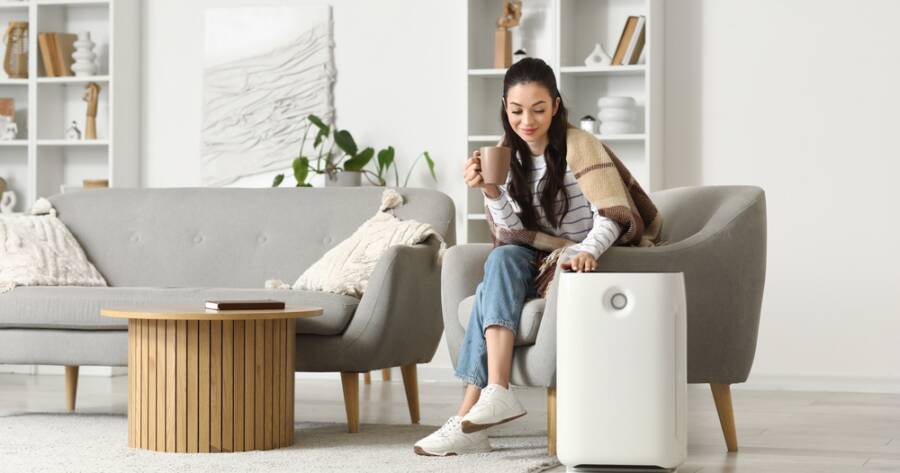
Indoor air can contain far more than dust. Pet dander, pollen, smoke particles, mold spores, and volatile compounds from cleaning products or furniture can all circulate through a home, often without being visible. That has made air purifiers increasingly popular, especially for people concerned about allergies, asthma, or wildfire smoke. The bigger question is whether they truly make a difference. Research suggests they can help, but their effectiveness depends heavily on the type of purifier, the filter inside, and the problem being targeted.
What Air Purifiers Actually Do
Portable air purifiers are designed to clean the air in a single room rather than an entire home. Most work by pulling indoor air through one or more filters, trapping pollutants, and then pushing cleaner air back into the room. While designs vary, the basic function remains the same: capture contaminants suspended in the air before they are inhaled.
That distinction matters because air purifiers only work on particles and gases moving through the device. They do not clean surfaces, furniture, or carpets where pollutants may settle. A purifier can lower airborne contaminants, but it cannot replace vacuuming, moisture control, or good ventilation. Its role is best understood as one part of a larger indoor air quality strategy rather than a complete solution on its own.
HEPA Filters Have the Strongest Evidence
Among the many purifier technologies on the market, mechanical filtration with a true HEPA filter has the strongest support. HEPA filters are designed to capture at least 99.7 percent of fine airborne particles around 0.3 microns in size, including dust, pollen, smoke particles, and some bacteria or virus-containing droplets. That makes them especially useful for particle pollution.
Research has shown that HEPA-based purifiers can reduce indoor particulate matter and may help people with allergies by lowering airborne pollen, dust, and pet-related particles. Their performance, however, still depends on the unit being properly sized for the room and used consistently. A true HEPA purifier with a good fan and adequate airflow generally performs far better than devices using vague terms like “HEPA-type” or “HEPA-like,” which may not meet the same standard.
They Help Most With Particles, Not Every Pollutant
Air purifiers tend to work best on airborne particles, especially fine particulate matter known as PM2.5. That includes smoke, dust, pollen, some mold spores, and certain allergy-triggering particles. For households dealing with wildfire smoke, pet dander, or general dust, a well-chosen purifier can make a noticeable difference in air quality.
The limits are just as important as the benefits. Many contaminants do not stay airborne for long. Dust mite allergens, for example, often settle quickly into bedding and upholstery, which means an air purifier may have only a modest impact unless regular cleaning happens too. Mold is another example. A purifier may remove some airborne spores, but it will not solve the moisture problem that allows mold to grow in the first place.
Gases and Odors Are More Complicated
Not all indoor pollutants are particles. Some are gases, including volatile organic compounds, cooking fumes, and odor-causing molecules. HEPA filters do not capture gases well, so purifiers aimed at odors or VOCs need an additional filter, usually activated carbon. Carbon can adsorb some gaseous pollutants, but performance varies widely depending on the filter size and the type of gas involved.
That means air purifiers can sometimes reduce smells from pets, cooking, or smoke, but expectations should remain realistic. Activated carbon filters tend to become saturated faster than particle filters and need regular replacement. Even then, they are not equally effective against every compound. For serious indoor VOC issues coming from paint, cleaning products, or new furniture, source control and ventilation often matter more than a purifier alone.
Some Technologies Are Better Avoided
Not every air purifier technology is equally helpful, and some may create new problems. Mechanical purifiers with HEPA and carbon filters are generally considered the safest and most reliable option for home use. Other approaches, including ionizers, electrostatic devices, and ozone generators, are more controversial.
Ozone generators are especially concerning because ozone itself can irritate the lungs and worsen respiratory symptoms. Some electronic air cleaners may also produce ozone as a byproduct. UV-based purifiers sound appealing, particularly when marketed around germs, but real-world effectiveness depends on strong light intensity and enough exposure time, which many consumer devices do not provide. A simple filtered purifier is usually the more evidence-based and lower-risk choice for indoor use.
Performance Depends on Size, CADR, and Consistent Use
Even an excellent purifier will disappoint if it is too small for the room or is rarely used. One of the most important specifications is Clean Air Delivery Rate, or CADR, which reflects how much clean air a purifier can deliver. Higher CADR numbers generally mean faster and more effective air cleaning. Matching the purifier to the room size matters because air needs to cycle through the device repeatedly to reduce pollutants.
Placement and daily habits also affect performance. A purifier works best when used regularly, ideally in the room where exposure matters most, such as a bedroom or living room. Closed windows, reduced indoor pollution sources, and regular filter replacement all improve results. Without that consistency, even a high-quality unit may not deliver the benefits suggested by laboratory testing.
A Useful Tool, Not a Magic Fix
Research supports the idea that air purifiers can work, especially when the goal is to reduce airborne particles like smoke, pollen, dust, and some pet allergens. A properly sized HEPA purifier with good airflow can improve indoor air quality and may help relieve symptoms for people with allergies or respiratory sensitivities.
At the same time, air purifiers have clear limits. They do not clean surfaces, remove all gases, or fix the underlying causes of mold, smoke, or chemical exposure. Their best use is as part of a broader approach that also includes ventilation, cleaning, humidity control, and reducing pollution sources indoors. When chosen carefully and used consistently, they can be genuinely helpful, just not magical.