

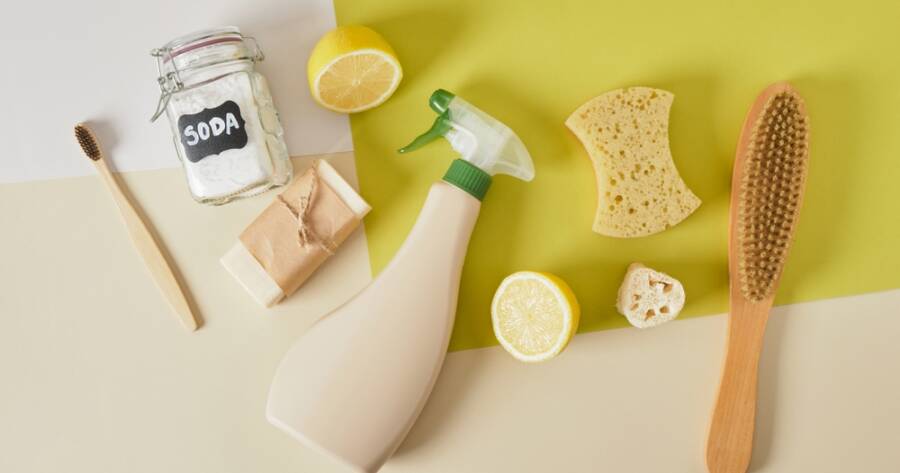
Many households already contain simple ingredients capable of tackling everyday cleaning tasks. Common pantry staples like vinegar, baking soda, and lemon offer practical solutions for removing grime, odors, and buildup. With a few basic combinations, homeowners can maintain tidy living spaces while avoiding unnecessary chemicals found in many conventional cleaning products.
Why Pantry-Based Cleaning Works
Natural cleaning methods often rely on basic chemical reactions that break down dirt and residue. Vinegar contains acetic acid, which helps dissolve mineral deposits and grease. Baking soda is mildly alkaline, making it effective for lifting stains and neutralizing odors. Citrus fruits such as lemons contain natural acids that help cut through grime and leave surfaces smelling fresh.
Because these ingredients are widely available and inexpensive, they provide an accessible alternative to many store-bought cleaners. While pantry cleaners may not replace specialized disinfectants in every situation, they work well for routine household maintenance.
All-Purpose Vinegar Cleaner
One of the simplest natural cleaning solutions uses distilled white vinegar and water. This mixture works well on glass, countertops, sinks, and many kitchen surfaces.
To make an all-purpose cleaner, combine equal parts white vinegar and water in a spray bottle. Shake gently to mix the solution. Spray the surface and wipe with a microfiber cloth or paper towel to remove dirt and streaks.
Vinegar also helps dissolve soap scum and hard water deposits, making it useful in bathrooms and kitchens. However, it should not be used on natural stone surfaces such as granite or marble because the acidity may damage the finish.
Baking Soda for Scrubbing
Baking soda is a versatile cleaning tool that works as a gentle abrasive. Its fine texture allows it to remove residue without scratching most surfaces.
To clean sinks, stovetops, or tubs, sprinkle baking soda directly onto the surface. Add a small amount of water to create a paste, then scrub with a sponge or cloth. The paste helps loosen stubborn grime and food residue.
Baking soda also works well for deodorizing refrigerators, trash bins, and carpets. A light sprinkle on fabric surfaces followed by vacuuming can help remove lingering odors.
Lemon for Grease and Freshness
Lemons provide natural acidity and a clean scent that works well in kitchens. The juice helps cut through grease while the peel can be used for mild scrubbing.
For greasy stovetops or cutting boards, squeeze fresh lemon juice onto the surface and let it sit for a few minutes before wiping clean. The acid helps break down oils and food residue.
Lemon juice can also brighten stainless steel fixtures. Apply a small amount to a cloth and polish gently to restore shine.
Natural Glass and Mirror Cleaner
Shiny windows and mirrors can be cleaned easily with simple pantry ingredients. A vinegar-based mixture removes fingerprints, dust, and streaks.
Mix one cup of water with one cup of white vinegar and add a teaspoon of cornstarch. Shake the bottle well before each use, as the cornstarch helps prevent streaking.
Spray lightly on glass surfaces and wipe with a lint-free cloth or newspaper for a clear finish.
Deodorizing Drains Naturally
Kitchen and bathroom drains sometimes develop unpleasant odors due to food residue or soap buildup. A natural cleaning reaction using baking soda and vinegar can help freshen drains.
Start by pouring half a cup of baking soda into the drain. Follow with one cup of vinegar. The mixture will fizz as the ingredients react. Allow it to sit for about ten minutes before flushing with hot water.
This method helps loosen debris and neutralize odors without relying on harsh chemical drain cleaners.
Cleaning the Microwave With Steam
Microwaves often collect splatters from heated food, which can become difficult to remove if left untreated. A quick steam treatment using vinegar or lemon helps soften dried residue.
Fill a microwave-safe bowl with one cup of water and two tablespoons of vinegar or lemon juice. Heat the bowl in the microwave for several minutes until steam forms on the interior walls.
After the microwave cools slightly, wipe the surfaces with a damp cloth. The steam loosens food particles, making them easy to remove.
Removing Stains From Cutting Boards
Wooden cutting boards can absorb food stains and odors over time. Lemon and salt provide an effective natural cleaning combination.
Sprinkle coarse salt across the cutting board surface. Cut a lemon in half and use it to scrub the salt across the board. The salt acts as a mild abrasive while the lemon helps lift stains and neutralize odors.
Rinse the board with warm water and allow it to dry completely before storing.
Keeping Cleaning Simple and Effective
Natural cleaning using pantry ingredients works best when done regularly. Frequent light cleaning prevents buildup that may require stronger solutions later. Simple mixtures made from vinegar, baking soda, lemon, and salt can handle many everyday tasks throughout the home.
While commercial cleaners remain useful for specialized jobs, pantry-based solutions provide a practical way to maintain cleanliness with fewer chemicals. By using ingredients already found in most kitchens, homeowners can simplify routines, reduce costs, and keep living spaces fresh and well maintained.